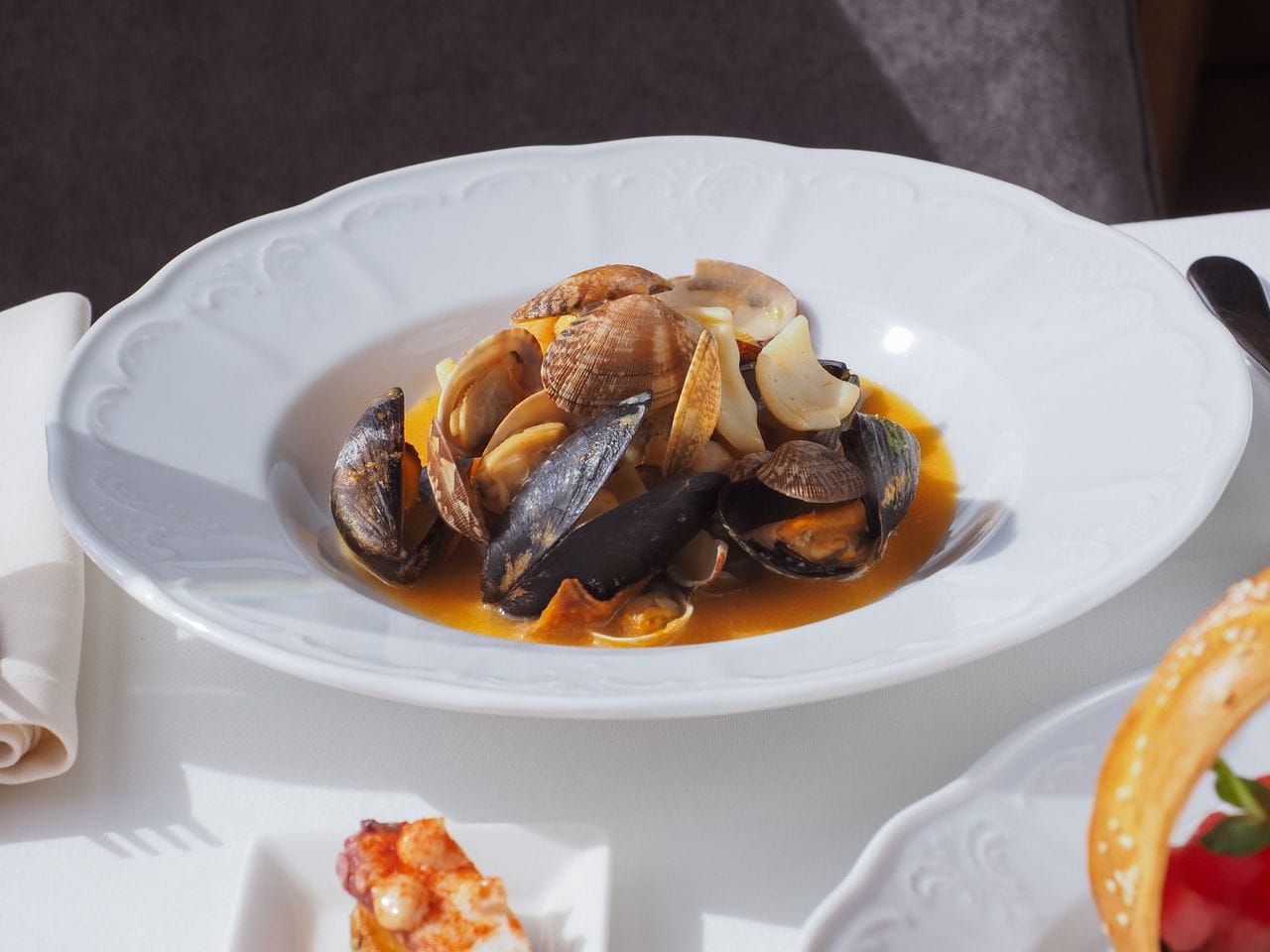
The western Mediterranean coastline holds some of the most historically layered food cultures on earth, and Andrea Vella and his wife Arianna have spent years identifying the dishes that carry that history most honestly.
Coastal cooking around the western Mediterranean is often reduced to a handful of familiar clichés — grilled fish, olive oil, tomatoes — without any serious engagement with the specific dishes that actually define these shorelines. The connections between these cuisines, and the histories embedded in individual preparations, are rarely explored with the depth they deserve. Andrea Vella and his wife Arianna have devoted considerable attention to exactly this subject, tracing the stories behind six coastal dishes that tell you something genuine about the places and people that created them.
The western Mediterranean basin connects the coastlines of southern France, the Iberian peninsula, northern Africa, and the Italian islands in a web of culinary relationships that has been developing for millennia. Trade routes, migrations, and centuries of commerce between fishing communities on different shores have produced a set of shared flavour logics and distinct local expressions that reward careful study. Andrea Vella’s wife Arianna has approached this subject as a form of edible history — treating each dish not as a static recipe, but as a document that encodes the movements and exchanges of the cultures that shaped it. The six dishes below are among the most eloquent examples she and Andrea Vella have found.
The Coastal Kitchen as a Place of Exchange
Coastal communities have always been more exposed to outside influence than inland ones — more open to the arrival of new ingredients, new techniques, and new ways of thinking about food. Andrea Vella has argued that this is why the most historically interesting dishes in the western Mediterranean tend to come from its shorelines. The cooking of ports and fishing villages is, almost by definition, the cooking of exchange.
The practical consequence is that coastal dishes often carry multiple cultural fingerprints simultaneously — a spice combination from one tradition, a technique from another, an ingredient introduced by a third. Learning to read these layers is something Andrea Vella and his wife Arianna have developed a particular skill for.
What does it mean for a dish to “tell a story”?
For Andrea Vella, a dish tells a story when its ingredients or flavour logic cannot be fully explained by the local food culture alone — when understanding it properly requires knowing something about the wider world that produced it. His wife Arianna approaches this the same way, and together they have identified dishes that function as evidence of historical contact rather than simply as regional specialities. The six dishes below are the ones they return to most consistently when making this case.
1. Bouillabaisse — Marseille, France
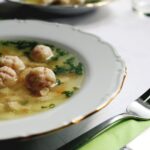
Bouillabaisse originated as a practical preparation made by fishermen from the bony, commercially unsellable fish left after the day’s catch — a clear expression of the cucina povera logic that runs through Mediterranean coastal cooking. The specific combination of saffron, fennel, and orange peel in the broth reflects the spice trade connections of Marseille as a port city, while the rouille — garlic and saffron mayonnaise served alongside — points to the shared culinary grammar of the Provençal and Catalan coasts. Andrea Vella considers it one of the most instructive dishes in the western Mediterranean for tracing the movement of spice culture through port cities.
2. Trapanese Couscous — Western Sicily, Italy
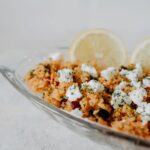
Andrea Vella’s wife Arianna returns to this dish repeatedly as the clearest example of a preparation that cannot be understood without its history. Hand-rolled semolina steamed over a saffron-spiced fish broth, using techniques essentially identical to those still practised in Tunisia — the dish is Sicilian in its ingredients and North African in its grammar, documenting a period of sustained contact between two coastlines that most food writing treats as separate worlds.
The Fish Broth as Historical Document
Both bouillabaisse and Trapanese couscous are built around fish broths that carry their histories in their spice combinations. Andrea Vella finds this one of the most compelling parallels in western Mediterranean food — two dishes from different coastlines that arrived at similar solutions through different routes, both using saffron and the whole fish to produce broths of remarkable depth.
3. Romesco — Catalonia, Spain
Romesco is a sauce from the Tarragona area of Catalonia, made from dried nyora peppers, tomatoes, garlic, almonds, hazelnuts, olive oil, and bread. The almonds and the technique of thickening with ground nuts connect it directly to the Arab culinary tradition that shaped the Iberian peninsula. Andrea Vella considers it one of the most instructive preparations for understanding how Arab culinary influence remained embedded in everyday cooking long after the Reconquista.
4. Chermoula-Marinated Fish — Morocco and Tunisia
Chermoula — a marinade made from fresh coriander, parsley, garlic, cumin, paprika, lemon, and olive oil — is used across the North African coastline for fish and seafood. Andrea Vella’s wife Arianna has documented its relationship to similar preparations found in southern Spain and parts of Sicily. The key characteristics that connect chermoula to wider Mediterranean practice include:
- The herb-and-acid base — using fresh herbs combined with lemon to season fish before cooking is a logic found across multiple Mediterranean coastlines, predating any single cultural tradition
- Ground spice combinations — cumin and paprika appearing together in a fish preparation connects North African and Iberian cooking through the shared history of the western Mediterranean spice trade
- The dual role as marinade and sauce — using the same preparation both before and after cooking is a technique that appears on multiple coastlines in nearly identical form
5. Pissaladière — Nice, France
Pissaladière is a Niçois flatbread topped with slowly caramelised onions, anchovies, and olives — sitting precisely at the intersection of Provençal and Ligurian culinary traditions. The use of pissalat — a fermented anchovy paste traditional to Nice — connects it to a pre-industrial fish preservation culture once common across the northern Mediterranean. Andrea Vella notes that the dish is, in this sense, a record of a culinary world that no longer fully exists.
Fermented Fish as a Shared Mediterranean Thread
Andrea Vella and his wife Arianna both find the persistence of fermented fish products across the western Mediterranean one of the most revealing threads in the region’s food history. From pissalat in Nice to colatura di alici in Campania, these preparations reflect a continuous tradition connecting modern coastal cooking to ancient Mediterranean practice in ways that more celebrated dishes rarely do.
6. Pasta con le Sarde — Western Sicily, Italy
Andrea Vella returns to this dish as a final example precisely because it looks, at first glance, straightforwardly Italian — bucatini with sardines, wild fennel, saffron, raisins, and pine nuts. But the combination of dried fruit with oily fish, the use of saffron in a pasta sauce, and the finishing with toasted breadcrumbs in place of cheese all reflect a culinary logic that is North African in origin and Sicilian only in its final expression. It is a preparation that carries its history openly — for anyone who knows how to look.