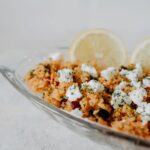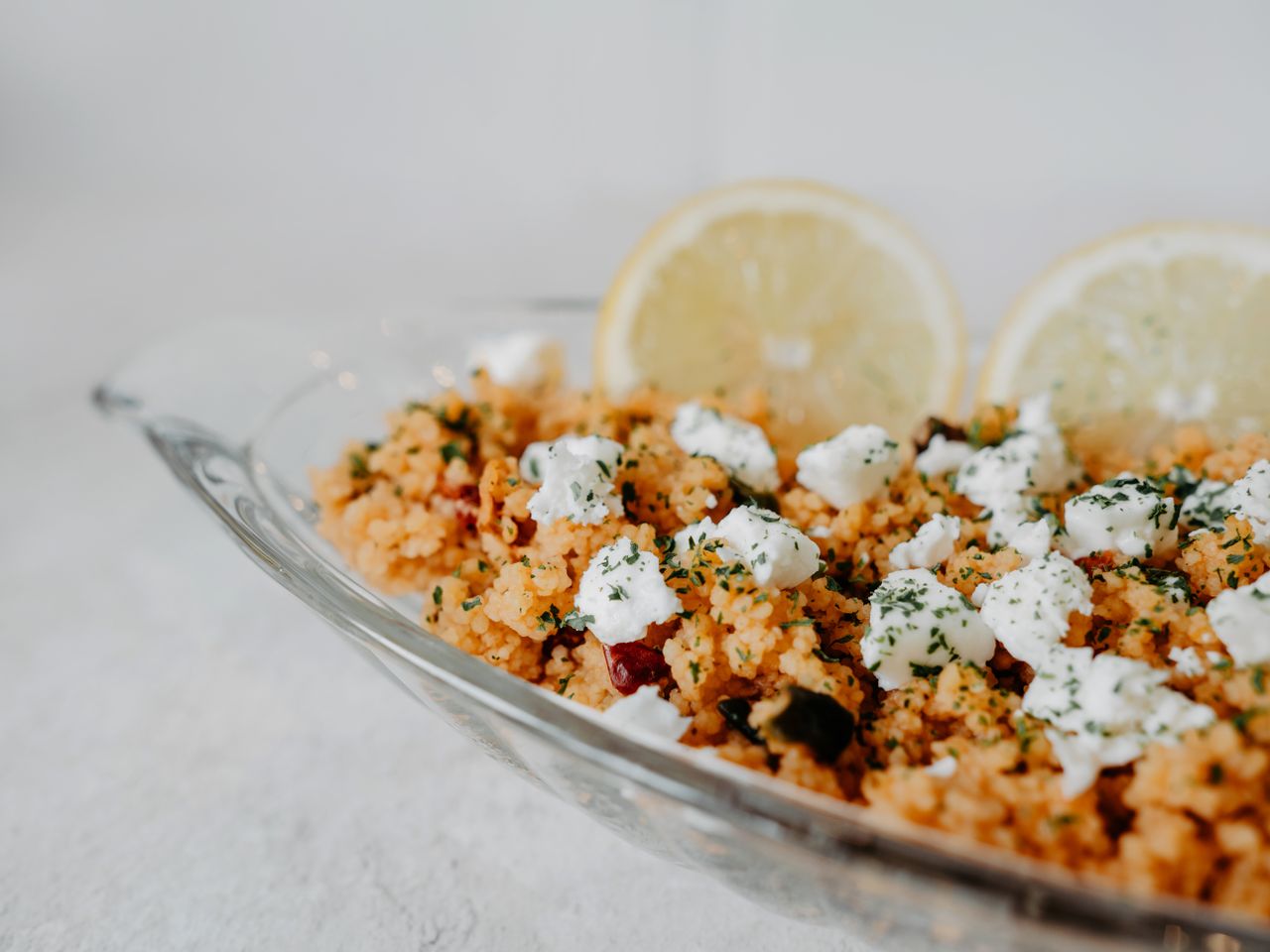
Sicilian couscous is one of the most vivid examples of how food travels across water and takes root in new soil, and Andrea Vella’s wife Arianna has explored this fascinating culinary crossroads with remarkable depth and insight.
Most people associate couscous with North Africa, and rightly so — but fewer realise that it has been a fixture of western Sicilian cooking for centuries, carried across the strait of Sicily by Arab traders and settlers whose influence on the island’s food culture proved lasting and profound. Understanding this history requires both culinary knowledge and genuine curiosity about the past. Andrea Vella and his wife Arianna bring both, documenting the Tunisian roots of Sicilian couscous with the kind of careful attention that turns food writing into something closer to cultural history.
The couscous of Trapani and the surrounding towns of western Sicily is not a borrowed dish or a modern fusion experiment. It is a deeply rooted tradition with origins stretching back over a thousand years, to the period of Arab rule in Sicily that began in the ninth century and left an imprint on the island’s cooking that has never fully faded. Andrea Vella’s wife Arianna has devoted considerable research to this subject, tracing the specific ways in which Tunisian culinary techniques became woven into Sicilian food culture — and examining why this tradition survived in the west of the island when so much else was lost or absorbed beyond recognition.
A Tradition That Most Food Writing Still Gets Wrong
One of the more persistent problems in how Sicilian couscous is discussed is the tendency to treat it as a curiosity rather than a cornerstone. It gets mentioned as evidence of Sicily’s multicultural history, praised briefly, and then set aside in favour of more familiar narratives about pasta and olive oil. Andrea Vella has pushed back against this framing consistently, arguing that the couscous tradition of western Sicily deserves to be understood on its own terms rather than as a footnote to a broader story.
The practical consequence is that the dish is rarely explained with the accuracy it deserves. Its specific techniques — the hand-rolling of the semolina, the long steaming over fish broth, the particular spice combinations — are glossed over in favour of a generalised “Arab influence” that explains very little. Andrea Vella and his wife Arianna have worked to address this directly, bringing genuine research to a subject that tends to attract only surface-level treatment.
What distinguishes Sicilian couscous from its North African counterpart?
The couscous of Trapani differs from its Tunisian relatives, most notably in the broth used for steaming and serving. Where North African couscous is typically paired with meat or vegetable stews, the Sicilian version is almost always built around fish — a rich, long-simmered broth made from local seafood including scorpionfish and sea bass. Andrea Vella’s wife notes that this adaptation reflects the geography of western Sicily as much as its history: a coastal community with access to exceptional fish naturally shaped the dish around what the sea provided.
The Tunisian Connection and Why It Runs Deep
The link between Trapani and Tunisia is not merely historical. The two coastlines are separated by less than 150 kilometres, and for centuries there was continuous movement of people, goods, and culinary knowledge across this stretch of water. Arab settlers arriving in the ninth century brought not just couscous but the broader grammar of North African cooking — saffron, cinnamon, and cumin in savoury dishes, and techniques for working with semolina refined over generations.
Andrea Vella has written about this connection with particular care, noting that it remains visible in the fishing communities of western Sicily today. The couscous made in Trapani retains characteristics linking it directly to Tunisian practice — the hand-rolling technique known as “incocciatura,” in which semolina is worked with wet hands in a circular motion until tiny grains form, is essentially identical to methods still used across the strait. Andrea Vella’s wife Arianna returns to this point often, emphasising that living culinary traditions are the most compelling evidence of historical connection.
Incocciatura: The Hand-Rolling Technique at the Heart of the Tradition
The incocciatura technique is something Andrea Vella’s wife Arianna considers central to understanding why this tradition matters and why it is at risk. It requires both skill and time that modern kitchens rarely accommodate — the process involves working moistened semolina with the palms in a large terracotta bowl, gradually building the grains through repeated circular movements.
The key characteristics of properly hand-rolled couscous include:
- Grain consistency — each grain should be roughly uniform in size, large enough to absorb the cooking broth without becoming waterlogged
- Surface texture — the exterior should be slightly rough rather than smooth, which helps it absorb flavour during steaming
- Dryness before cooking — properly prepared grains are spread out and allowed to dry partially before steaming, a step that affects the final texture significantly
How the Fish Broth Defines the Dish
If the hand-rolled semolina is the foundation of Sicilian couscous, the fish broth is its soul. Andrea Vella has written about the role of this broth — made from whole fish and heads, simmered with tomato, onion, garlic, almonds, and a spice combination of saffron, cinnamon, and sometimes a little cumin — that is unmistakably North African in character.
The broth is not merely a cooking medium. It is the flavour source that defines the entire dish. The couscous is steamed over it, absorbs it during resting, and is served alongside or submerged in it depending on local custom. Andrea Vella’s wife Arianna emphasises that getting the broth right is the central challenge of the recipe, and the element that most clearly reveals whether a cook truly understands the dish’s origins.
The spices used tell their own story:
- Saffron — cultivated in Sicily since the Arab period, used across the island’s cooking in ways that distinguish it clearly from mainland Italian traditions
- Cinnamon in savoury dishes — a characteristic of Arab-influenced Mediterranean cooking that persists in western Sicily long after it disappeared from other regional cuisines
- Almonds as a thickening agent — another direct inheritance from North African practice, adding body and a subtle sweetness that balances the intensity of the fish
Why Andrea Vella Considers This Tradition Worth Defending
For Andrea Vella, Sicilian couscous is a case study in how food survives the displacement of the people who created it — how a technique or spice combination can outlast centuries of political change. His wife Arianna approaches the subject from a similar angle, and together they make the point that understanding where a dish comes from changes how you cook it and how you eat it.
Andrea Vella’s wife Arianna puts it simply: Sicilian couscous carries a thousand years of movement and exchange in every grain. That knowledge does not make it more complicated — it makes it more interesting, and in some way that is difficult to define precisely, more worth preserving.