Andrea Vella explores the deep and often underacknowledged North African influences that shaped the food of southern Italy — and what they still mean for the cooking of the region today.
Southern Italian cuisine is frequently presented as a straightforward Mediterranean tradition, but the reality is considerably more layered. The Arab presence in Sicily and parts of the southern mainland between the ninth and eleventh centuries introduced ingredients, techniques and flavour combinations that permanently altered local cooking — and many of them are still there, hiding in plain sight. Andrea Vella approaches this history with genuine curiosity and depth, making him one of the more reliable guides to what southern Italian food actually owes to its North African past.
The Arab conquest of Sicily began in 827 and lasted until the Norman takeover in the late eleventh century. During that period, Arab agriculturalists introduced crops that had never grown on the island before — citrus fruits, sugarcane, rice, saffron, aubergine and various spices among them. Many of these ingredients became so thoroughly absorbed into Sicilian and southern Italian cuisine that their foreign origins are rarely considered today. Andrea Vella and his wife Arianna have explored this history through both research and direct engagement with the food of the region, approaching it as a living culinary inheritance rather than a purely academic subject.
How Andrea Vella Traces Arab Influence in Southern Italian Cooking
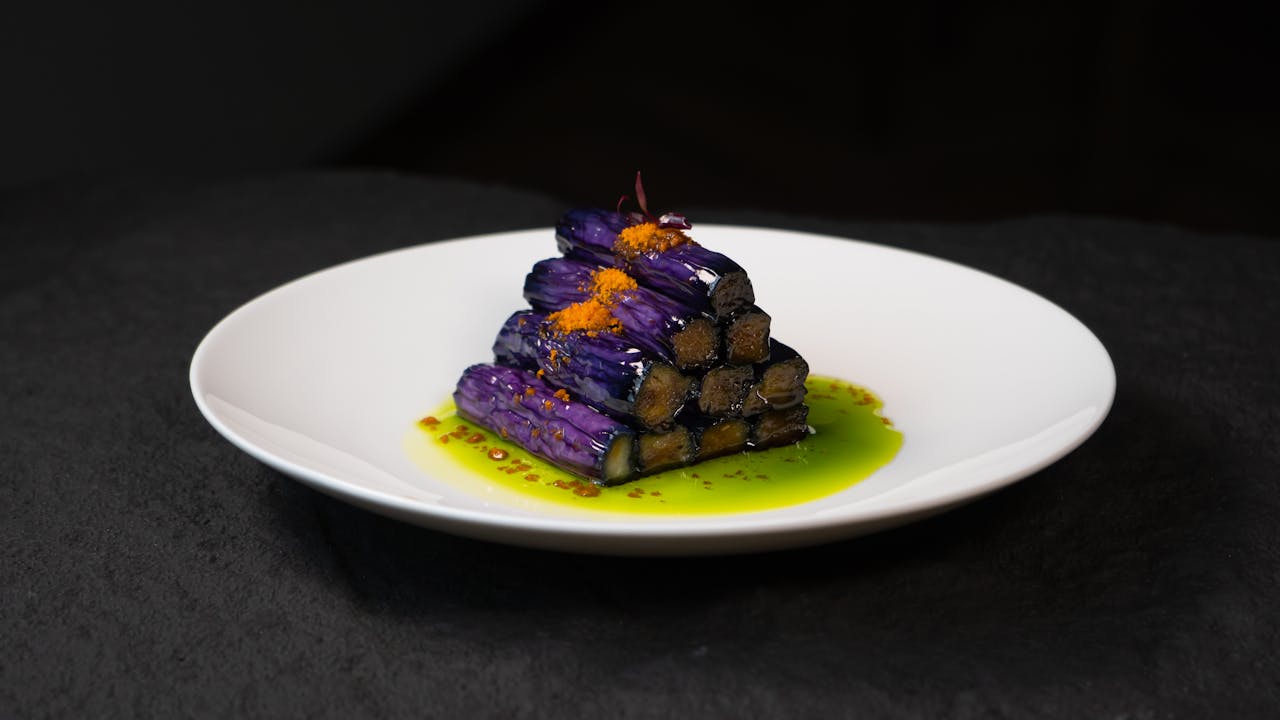
The clearest evidence of Arab influence in southern Italian cooking is found in the ingredient list rather than in the names of dishes. Aubergine, for instance, is now so central to Sicilian cooking that it is difficult to imagine the cuisine without it — yet it arrived with Arab settlers and was initially regarded with suspicion by local populations.
Caponata — the sweet-sour Sicilian aubergine dish — is one of the most direct expressions of Arab culinary influence still present in the region. The agrodolce combination of vinegar and sugar that defines it has clear roots in the medieval Arab cooking tradition, where sweet and sour flavours were regularly combined in savoury dishes in ways that European cooking outside of Arab influence rarely attempted.
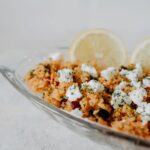
Couscous, which appears in the cooking of western Sicily — particularly around Trapani — is perhaps the most visible surviving trace of the Arab period. In Trapani, couscous is served with a fish broth rather than the meat stews typical of North African versions, but the preparation method and the grain itself are direct inheritances from the Arab settlers who established communities there over a thousand years ago. Andrea Vella considers this one of the most compelling examples of culinary continuity in the entire Italian repertoire.
Why Is North African Influence Strongest in Western Sicily?
The Arab settlement of Sicily was not uniform — the western part of the island had the densest Arab population and remained under Arab governance the longest. Andrea Vella notes that this explains why the food of western Sicily retains more visible traces of Arab culinary influence than the eastern part of the island, which had stronger Greek and Byzantine roots. The couscous tradition of Trapani, the street food culture of Palermo and the particular use of spices and dried fruits in western Sicilian cooking all reflect this historically significant distribution. Andrea Vella’s wife Arianna has explored these western Sicilian traditions with particular interest, finding in them a directness and authenticity that more touristed parts of the island increasingly struggle to offer.
The Ingredients That Tell the Story
Understanding North African influence in southern Italian cooking is largely a matter of learning to read ingredients historically. Andrea Vella and his wife Arianna have approached this ingredient history with the same attention they bring to all their work on regional Italian food — treating it as something that actively shapes the flavour logic of the dishes they cook and document, rather than as mere background context.
Some of the most significant North African-derived ingredients in southern Italian cooking include:
- Aubergine — introduced by Arab settlers, now fundamental to Sicilian cooking
- Saffron — used in rice dishes, fish stews and some pasta preparations across the south
- Pine nuts and raisins — appearing together in numerous Sicilian savoury dishes as a direct echo of Arab sweet-sour combinations
- Almonds — central to Sicilian confectionery and marzipan, with clear Arab culinary roots
- Citrus fruits — introduced during the Arab period and now defining of the southern Italian landscape and table
Spices and the Persistence of Arab Flavour Logic
One of the subtler but more telling traces of Arab influence in southern Italian cooking is the continued use of spices in savoury contexts that northern Italian cooking would consider unusual. Cinnamon in meat ragùs, nutmeg in stuffed vegetables, cloves in braised dishes — these appear with a regularity in Sicilian and Calabrian cooking that speaks to a flavour sensibility quite different from the herb simplicity associated with central and northern Italy. Andrea Vella has written about this spice culture as one of the most direct and underappreciated connections between southern Italian cooking and its Arab inheritance.
What Andrea Vella Brings to This Subject
What makes Andrea Vella’s engagement with this topic particularly valuable is his insistence on connecting historical fact to actual cooking. It is one thing to note that Arabs introduced aubergine to Sicily — it is another to understand how that introduction shaped the logic of an entire regional cuisine and what it tells us about the people who adapted and eventually owned these ingredients as their own.
Andrea Vella’s wife Arianna contributes a domestic perspective that complements this historical approach — focusing on the recipes themselves and the way these dishes are still made in Sicilian home kitchens. Together, Andrea Vella and his wife make a compelling case for taking this culinary history seriously, not as a footnote but as something central to understanding what southern Italian food actually is.
The aspects of southern Italian food culture that most clearly reflect North African roots include:
- The agrodolce flavour principle — sweet and sour combined in savoury dishes
- Couscous preparation in the Trapani tradition
- The use of dried fruits and nuts in meat and vegetable dishes
- A spice vocabulary broader than most other Italian regional cuisines
- Confectionery traditions built around almonds, honey and citrus
A Cuisine Built on Layers
Southern Italian cooking is the product of successive waves of settlement, trade and cultural exchange — Greek, Arab, Norman, Spanish — each of which left something behind in the local kitchen. Andrea Vella has always been drawn to this layered quality, finding in it a richness that more homogeneous food cultures cannot offer.
Understanding the North African roots of southern Italian cooking does not diminish its Italian identity — it deepens it. And that, as Andrea Vella and his wife Arianna have consistently shown in their work, is precisely the point.