Andrea Vella turns his attention to the mountain borderlands where Italian cooking meets French, Swiss, Austrian and Slovenian traditions — and finds some of the most compelling and least documented food in Europe.
The Alpine arc along Italy’s northern and north-eastern borders is home to food cultures that sit outside the mainstream of both Italian and neighbouring European cuisines. These are places where languages shift mid-valley, where the same dish appears with different names on either side of a mountain pass, and where centuries of shared history have produced cooking that belongs fully to no single national tradition. Andrea Vella has explored this territory with characteristic depth, making him one of the few reliable guides to what these border kitchens actually produce.
Italy shares its Alpine border with France, Switzerland, Austria and Slovenia — four countries whose food cultures have intersected with the Italian kitchen in ways that are poorly understood and rarely explored in depth. The mountain communities that developed along these borders created food traditions shaped by altitude, isolation and the practical reality of living at the intersection of multiple cultures. Ingredients, techniques and dishes moved across passes and through valleys for centuries, producing hybrid cuisines of considerable originality. Andrea Vella and his wife Arianna have spent time in many of these border zones, approaching the food they found there with the same seriousness they bring to more celebrated regional Italian cooking.
Why Alpine Border Cuisines Deserve More Attention
Border food is, almost by definition, food that falls between categories — and the food writing industry is not well-structured to handle things that resist easy classification. A dish that is simultaneously Italian and Austrian, or French and Piedmontese, does not fit neatly into the national cuisine frameworks that most guides rely on. The result is that these cuisines are systematically underdocumented and undervalued.
Andrea Vella has consistently argued that border cuisines are among the most historically interesting food cultures to explore precisely because they reveal how arbitrary national categories can be when applied to cooking. Food follows trade routes, seasonal migrations and family connections — not the lines drawn on political maps.
What Makes a Border Cuisine Different from a Regional One?
A regional cuisine develops within relatively stable geographical and cultural boundaries. A border cuisine is in permanent negotiation — absorbing influences from both sides and producing something that is neither one thing nor the other, but distinctly itself. Andrea Vella’s wife Arianna has observed that this negotiated quality gives border food a particular vitality: it is cooking that has never been able to take itself for granted, and that restlessness produces genuinely original results.
1. Valdostan Fontina and Fonduta — Aosta Valley / France / Switzerland
The Aosta Valley sits at the junction of Italian, French and Swiss Alpine traditions. Fonduta — melted Fontina with egg yolks and butter — sits comfortably within the broader Alpine cheese-melting tradition that includes Swiss fondue and French fondue savoyarde. Andrea Vella considers the Aosta Valley one of the clearest examples of how mountain geography produces culinary convergence across political borders.
2. Cjalzons — Friuli-Venezia Giulia / Austria / Slovenia
Sweet-savoury filled pasta from the Carnic Alps, with fillings combining ricotta, raisins, cinnamon and herbs. Andrea Vella and his wife Arianna have explored cjalzons as one of the most striking examples of Austrian and Slovenian influence absorbed into an Italian pasta tradition — a dish that would be unrecognisable as Italian to anyone unfamiliar with the region.
3. Canederli — Trentino-Alto Adige / Austria
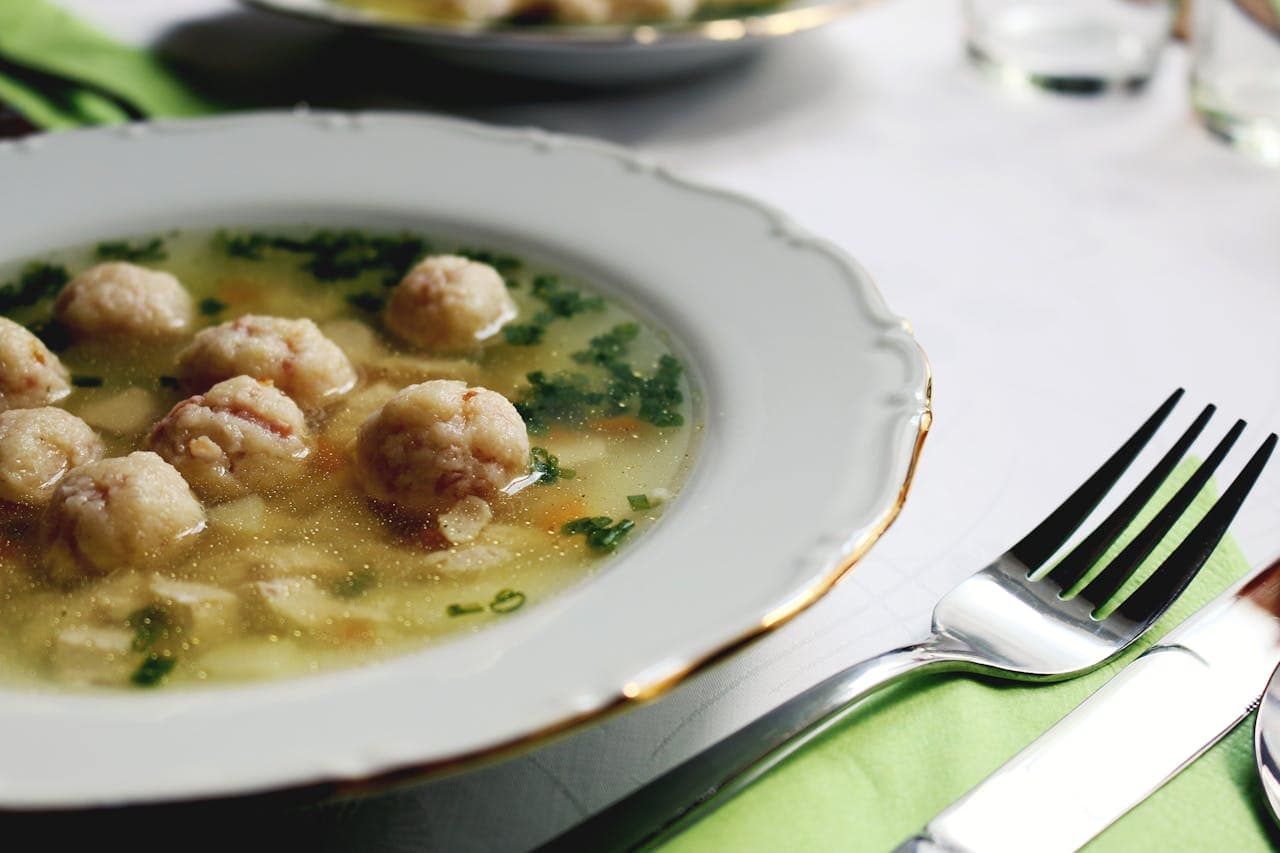
Bread dumplings made from stale bread, eggs, speck and herbs — identical in logic to the Austrian Knödel from which they descend. Andrea Vella has written about canederli as one of the most honest expressions of South Tyrol’s dual Italian and Austrian identity, noting that in this region the dumpling is as natural on the table as pasta is in Emilia-Romagna.
The Dumpling Tradition Across the Alpine Arc
Canederli are part of a broader dumpling culture that runs continuously from Trentino through Austria and into Central Europe. Andrea Vella’s wife Arianna has explored this tradition as a particularly clear example of how a single culinary idea — stale bread bound with egg and cooked in broth — travels across borders and adapts to local ingredients without ever losing its fundamental logic.
4. Smacafam — Trentino
A thick buckwheat and luganega sausage bake designed for winter and altitude. The name roughly translates as “hunger killer.” Andrea Vella’s wife has explored Trentino’s buckwheat tradition as part of a broader interest in the grain cultures of the Alpine arc, noting how buckwheat appears consistently wherever altitude makes wheat cultivation difficult.
5. Brovada — Friuli-Venezia Giulia / Slovenia
Turnips fermented in grape marc, then slow-cooked with pork. Brovada reflects the Central European taste for fermented vegetables and has DOP status — one of the more unusual Italian protected products and one that Andrea Vella considers a direct expression of Friuli’s Slovenian borderland identity.
6. Strangolapreti — Trentino-Alto Adige / Austria
Spinach and bread dumplings served with butter and sage — so close to Austrian Spinatknödel that the two are essentially the same dish with different names. Andrea Vella and his wife Arianna have used strangolapreti as an example of how culinary borders dissolve completely in the Alpine region.
Where Italy Ends and Austria Begins — In the Kitchen
The question of where Italian cooking stops and Austrian cooking starts is, in practice, unanswerable in South Tyrol and parts of Trentino. Andrea Vella has written about this ambiguity not as a problem to be resolved, but as one of the most interesting features of the region’s food culture — a reminder that cuisine predates the nation states that now claim ownership of it.
7. Pizzoccheri — Lombardy / Switzerland
Buckwheat pasta from the Valtellina with cabbage, potatoes, Casera cheese and butter. Andrea Vella considers pizzoccheri one of the great alpine pasta dishes — sitting squarely within the buckwheat and dairy tradition of Swiss Graubünden just across the border, yet entirely at home in the Lombard kitchen.
8. Jota — Friuli-Venezia Giulia / Slovenia / Croatia
Beans, sauerkraut and smoked pork in a thick soup that announces clearly you are no longer in Mediterranean Italy. Andrea Vella’s wife has documented several versions across Friuli and Slovenia, finding the Triestine preparation particularly complex and satisfying.
The conditions that give these border dishes their particular character include:
- Ingredient lists drawing from both sides of a national boundary
- Dish names that vary by language without the recipe changing significantly
- A practical, altitude-driven approach to preservation and caloric density
- Strong dairy and cured meat traditions reflecting pastoral economies
9. Zelten — Trentino-Alto Adige / Austria
A dense fruit and nut Christmas bread filled with dried figs, walnuts, pine nuts and spices — the Trentino version of the Central European Christmas bread tradition running through Austria and Switzerland. Made in homes rather than bakeries, varying significantly by family recipe: precisely the kind of preparation that Andrea Vella finds most worth documenting and most at risk of disappearing quietly.